Scott Lurndal <slp53@pacbell.net> wrote:appliances. For
It's not uncommon to use NEMA L6-xxP/R connectors for 240VAC
to120VAC non-GFCI circuits in a garage, one typically is required by NEC
theyuse L5-20P/R receptacles and plugs to prevent Joe Sixpack from >>electrocuting himself in a wet garage.
Yes, I do think the twistlocks are a win for a number of reasons. And
do disconnect while plugged in, so you don't get the arc in your face ifnever seen
you disconnect under load like you do with straight-blades. I have
them in a residential install but I'd love to see more of them.
On Sat, 3 Jan 2026 13:54:15 -0500, CryptoengineerOur central heating/cooling system motor for the house and the dryer are
<petertrei@gmail.com> wrote:
On 1/1/2026 4:22 AM, Thomas Koenig wrote:
BCFD 36 <bcfd36@cruzio.com> schrieb:
<snippo>
What is 220 V used for in the US (assuming that this took placeStoves and clothes driers are the most common uses in domestic settings.
there)? I assume it would be 220 V/60 Hz?
My EV charger is also on a 220 line.
Oil furnaces, while getting rarer as they are replaced by heat pumps,
use them.
Or at least ours does. As did the one before it.
On 1/4/26 08:36, Paul S Person wrote:
On Sat, 3 Jan 2026 13:54:15 -0500, CryptoengineerOur central heating/cooling system motor for the house and the dryer are
<petertrei@gmail.com> wrote:
On 1/1/2026 4:22 AM, Thomas Koenig wrote:
BCFD 36 <bcfd36@cruzio.com> schrieb:
<snippo>
What is 220 V used for in the US (assuming that this took placeStoves and clothes driers are the most common uses in domestic settings. >>> My EV charger is also on a 220 line.
there)? I assume it would be 220 V/60 Hz?
Oil furnaces, while getting rarer as they are replaced by heat pumps,
use them.
Or at least ours does. As did the one before it.
on the 240 volt circuit. The actual heating, the stove, and the water
heater are all propane, as is the 22kw standby generator.
"Why a generator?", you may ask. Well, over Christmas our PG&E power was
out for 5 days. Expensive? Very! But no food spoiled, the TV and
confuser still worked, etc.
BCFD 36 <bcfd36@cruzio.com> writes:
On 1/4/26 08:36, Paul S Person wrote:
On Sat, 3 Jan 2026 13:54:15 -0500, CryptoengineerOur central heating/cooling system motor for the house and the dryer are
<petertrei@gmail.com> wrote:
On 1/1/2026 4:22 AM, Thomas Koenig wrote:
BCFD 36 <bcfd36@cruzio.com> schrieb:
<snippo>
What is 220 V used for in the US (assuming that this took placeStoves and clothes driers are the most common uses in domestic settings. >>>> My EV charger is also on a 220 line.
there)? I assume it would be 220 V/60 Hz?
Oil furnaces, while getting rarer as they are replaced by heat pumps,
use them.
Or at least ours does. As did the one before it.
on the 240 volt circuit. The actual heating, the stove, and the water
heater are all propane, as is the 22kw standby generator.
"Why a generator?", you may ask. Well, over Christmas our PG&E power was
out for 5 days. Expensive? Very! But no food spoiled, the TV and
confuser still worked, etc.
Most of Carmel and Pebble Beach/17 Mile Drive and parts of Pacific
Grove and Monterey were also out for several days during that same set of storms.
Down here at the southern end of the Santa Cruz mountains, we didn't
have any power outages during the holidays - but I did have 12 total
outages in 2025, most due to overly sensitive safety device false-alarm disconnects during wildfire season, one due to a failed 50yo underground primary circuit and two due to auto-vs-power-pole [either related
to the dozen wineries in the area or the local high school kids].
On 1/4/26 08:36, Paul S Person wrote:
On Sat, 3 Jan 2026 13:54:15 -0500, CryptoengineerOur central heating/cooling system motor for the house and the dryer are
<petertrei@gmail.com> wrote:
On 1/1/2026 4:22 AM, Thomas Koenig wrote:
BCFD 36 <bcfd36@cruzio.com> schrieb:
<snippo>
What is 220 V used for in the US (assuming that this took placeStoves and clothes driers are the most common uses in domestic settings. >>> My EV charger is also on a 220 line.
there)?ÿ I assume it would be 220 V/60 Hz?
Oil furnaces, while getting rarer as they are replaced by heat pumps,
use them.
Or at least ours does. As did the one before it.
on the 240 volt circuit. The actual heating, the stove, and the water
heater are all propane, as is the 22kw standby generator.
"Why a generator?", you may ask. Well, over Christmas our PG&E power was
out for 5 days. Expensive? Very! But no food spoiled, the TV and
confuser still worked, etc.
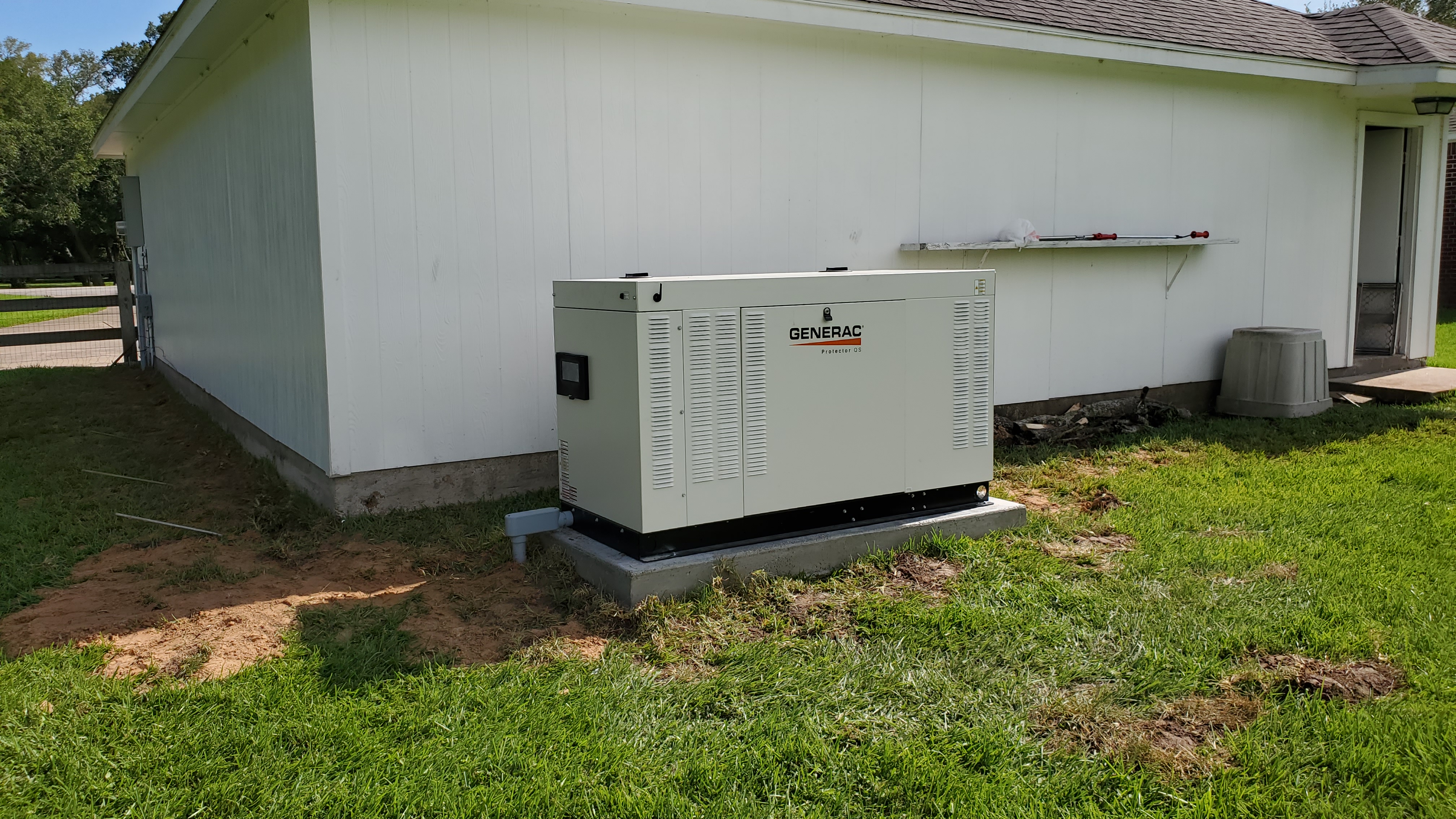
We ran on our 38 kW whole house generator last summer for four days
after hurricane Beryl in the Houston area. It runs our 7 tons of air conditioning easily,
Lynn McGuire <lynnmcguire5@gmail.com> schrieb:
We ran on our 38 kW whole house generator last summer for four days
after hurricane Beryl in the Houston area. It runs our 7 tons of air
conditioning easily,
7 tons of air conditioning?
On 1/10/2026 4:31 AM, Thomas Koenig wrote:
Lynn McGuire <lynnmcguire5@gmail.com> schrieb:
We ran on our 38 kW whole house generator last summer for four days
after hurricane Beryl in the Houston area. It runs our 7 tons of air
conditioning easily,
7 tons of air conditioning?
Freedom units!
From Wikipedia:
"A ton of refrigeration (TR or TOR), also called a refrigeration ton
(RT), is a unit of power used in some countries (especially in North America) to describe the heat-extraction rate of refrigeration and air conditioning equipment. It was originally defined as the rate of heat transfer that results in the freezing or melting of 1 short ton (2,000
lb; 907 kg) of pure ice at 0 øC (32 øF) in 24 hours.[1][2]"
Is also 12,000 Btu/hour, or 3.5 kW.
Lynn McGuire <lynnmcguire5@gmail.com> schrieb:
We ran on our 38 kW whole house generator last summer for four days
after hurricane Beryl in the Houston area. It runs our 7 tons of air
conditioning easily,
7 tons of air conditioning?
Sounds like a_really_ huge air conditioning unit, but I know that
building insulation is almost unheard of in the US.
On 1/10/2026 3:12 PM, Thomas Koenig wrote:
Sounds like a_really_ huge air conditioning unit, but I know that
building insulation is almost unheard of in the US.
And this is based on?
My last three houses, from 1996, have all been around R-20 in the walls
and R-30 in the ceilings.
Cryptoengineer <petertrei@gmail.com> schrieb:
On 1/10/2026 4:31 AM, Thomas Koenig wrote:
Lynn McGuire <lynnmcguire5@gmail.com> schrieb:
"A ton of refrigeration (TR or TOR), also called a refrigeration ton
(RT), is a unit of power used in some countries (especially in North
America) to describe the heat-extraction rate of refrigeration and air
conditioning equipment. It was originally defined as the rate of heat
transfer that results in the freezing or melting of 1 short ton (2,000
lb; 907 kg) of pure ice at 0 øC (32 øF) in 24 hours.[1][2]"
Is also 12,000 Btu/hour, or 3.5 kW.
So 7 tons is around 24 kW (at 0øC, of course efficiency depends
on temperature; this is obviously a nameplate capacity. Actual
cooling capacity depends on the temperatures involved, obviously).
Sounds like a _really_ huge air conditioning unit, but I know that
building insulation is almost unheard of in the US.
Thomas Koenig <tkoenig@netcologne.de> writes:
Cryptoengineer <petertrei@gmail.com> schrieb:
On 1/10/2026 4:31 AM, Thomas Koenig wrote:
Lynn McGuire <lynnmcguire5@gmail.com> schrieb:
"A ton of refrigeration (TR or TOR), also called a refrigeration ton
(RT), is a unit of power used in some countries (especially in North
America) to describe the heat-extraction rate of refrigeration and air
conditioning equipment. It was originally defined as the rate of heat
transfer that results in the freezing or melting of 1 short ton (2,000
lb; 907 kg) of pure ice at 0 øC (32 øF) in 24 hours.[1][2]"
Is also 12,000 Btu/hour, or 3.5 kW.
So 7 tons is around 24 kW (at 0øC, of course efficiency depends
on temperature; this is obviously a nameplate capacity. Actual
cooling capacity depends on the temperatures involved, obviously).
Sounds like a _really_ huge air conditioning unit, but I know that
building insulation is almost unheard of in the US.
Acutally, US building codes since the 1970s have required
substantial insulation. They've only become more strict
with time.
My house is insulated well enough that I don't need
air conditioning at all (coastal california).
Lynn McGuire <lynnmcguire5@gmail.com> schrieb:
We ran on our 38 kW whole house generator last summer for four days
after hurricane Beryl in the Houston area. It runs our 7 tons of air
conditioning easily,
7 tons of air conditioning?
Thomas Koenig <tkoenig@netcologne.de> wrote:
Lynn McGuire <lynnmcguire5@gmail.com> schrieb:
We ran on our 38 kW whole house generator last summer for four days
after hurricane Beryl in the Houston area. It runs our 7 tons of air
conditioning easily,
7 tons of air conditioning?
Weird American unit. Air conditioning system with the equivalent cooling capacity of seven tons of ice melting. We use BTUs too, God only knows why. Even the British don't use BTUs anymore. I think a ton is about 3.5kw. --scott
On 1/10/2026 3:12 PM, Thomas Koenig wrote:
Sounds like a_really_ huge air conditioning unit, but I know that
building insulation is almost unheard of in the US.
And this is based on?
My last three houses, from 1996, have all been around R-20 in the walls
and R-30 in the ceilings.
Thomas Koenig <tkoenig@netcologne.de> wrote:
Lynn McGuire <lynnmcguire5@gmail.com> schrieb:
We ran on our 38 kW whole house generator last summer for four days
after hurricane Beryl in the Houston area. It runs our 7 tons of air
conditioning easily,
7 tons of air conditioning?
Weird American unit. Air conditioning system with the equivalent cooling capacity of seven tons of ice melting. We use BTUs too, God only knows why. Even the British don't use BTUs anymore. I think a ton is about 3.5kw.
On 2026-01-11, Jay Morris <morrisj@epsilon3.me> wrote:
On 1/10/2026 3:12 PM, Thomas Koenig wrote:
Sounds like a_really_ huge air conditioning unit, but I know that
building insulation is almost unheard of in the US.
And this is based on?
My last three houses, from 1996, have all been around R-20 in the walls
and R-30 in the ceilings.
What is R-20 and R-30? Another kind of liberty unit? :-)
it is common. I have seen BTUs, CFM at xxx degrees, etc.
What is R-20 and R-30? Another kind of liberty unit? :-)
On 1/10/26 18:31, Scott Dorsey wrote:
Thomas Koenig <tkoenig@netcologne.de> wrote:I have never run across "tons" when talking about cooling.
Lynn McGuire <lynnmcguire5@gmail.com> schrieb:
We ran on our 38 kW whole house generator last summer for four days
after hurricane Beryl in the Houston area. It runs our 7 tons of air
conditioning easily,
7 tons of air conditioning?
Weird American unit. Air conditioning system with the equivalent cooling
capacity of seven tons of ice melting. We use BTUs too, God only knows why. >> Even the British don't use BTUs anymore. I think a ton is about 3.5kw.
--scott
On 1/11/26 10:42, Thomas Koenig wrote:
On 2026-01-11, Jay Morris <morrisj@epsilon3.me> wrote:
On 1/10/2026 3:12 PM, Thomas Koenig wrote:
Sounds like a_really_ huge air conditioning unit, but I know that
building insulation is almost unheard of in the US.
And this is based on?
My last three houses, from 1996, have all been around R-20 in the walls
and R-30 in the ceilings.
What is R-20 and R-30? Another kind of liberty unit? :-)
You must not have shopped for insulation before.
There is a very good entry in Wikipedia about R rating: https://en.wikipedia.org/wiki/R-value_(insulation) that I won't
reproduce here. I recommend reading it. But it says that it is used in
both American and European settings.
This is the first paragraph of the article:
"The R-value is a measure of thermal resistance, specifically how well a two-dimensional barrier, such as a layer of insulation,
In article <10k0qgo$3r1s$1@dont-email.me>, BCFD 36 <bcfd36@cruzio.com> wrote:
I have never run across "tons" when talking about cooling. I don't think >>it is common. I have seen BTUs, CFM at xxx degrees, etc.
It's pretty common for any industrial AC stuff. Americans also use
"BTU" when we mean "BTU/hr" which is almost as bad as the whole
"calories meaning kcal" mess.
Thomas Koenig <tkoenig@netcologne.de> wrote:the
What is R-20 and R-30? Another kind of liberty unit? :-)
Yes, it's a measure of thermal resistance. Ironically, it appeared in
US at a time when we were actively moving toward the metric system, backmentioned
in the seventies.
Nobody outside of construction folks actually use it. It was never
in my thermo class. I saw how it was calculated and it was kind of amess.
Scott Dorsey <kludge@panix.com> schrieb:<bcfd36@cruzio.com> wrote:
In article <10k0qgo$3r1s$1@dont-email.me>, BCFD 36
thinkI have never run across "tons" when talking about cooling. I don't
it is common. I have seen BTUs, CFM at xxx degrees, etc.
It's pretty common for any industrial AC stuff. Americans also use
"BTU" when we mean "BTU/hr" which is almost as bad as the whole
"calories meaning kcal" mess.
A good thing these were thrown out (except in the context of
nutrition, where they still occur).
Having different units for heat and mechanical energy is just
fundamentally broken, as is having things like Earth's gravity or
the density of certain liquids such as water or mercury in units
(except for their historical definition). Units just need to
be consistent.
I remember cracking up once when I read a definition of the
Reynolds number not as
Re = u * d * rho / eta
but as
Re = u * d * rho / (eta * c)
where c was the correction factor for the units, left unspecified,
of course. Hilarious!
On Mon, 12 Jan 2026 07:07:43 -0000 (UTC), Thomas Koenig ><tkoenig@netcologne.de> wrote:
Scott Dorsey <kludge@panix.com> schrieb:<bcfd36@cruzio.com> wrote:
In article <10k0qgo$3r1s$1@dont-email.me>, BCFD 36 =
I have never run across "tons" when talking about cooling. I don't = >think=20
it is common. I have seen BTUs, CFM at xxx degrees, etc.=20
It's pretty common for any industrial AC stuff. Americans also use=20
"BTU" when we mean "BTU/hr" which is almost as bad as the whole
"calories meaning kcal" mess.
A good thing these were thrown out (except in the context of
nutrition, where they still occur).
Having different units for heat and mechanical energy is just
fundamentally broken, as is having things like Earth's gravity or
the density of certain liquids such as water or mercury in units
(except for their historical definition). Units just need to
be consistent.
But ... but ... but ... consistency is the hobgoblin of small minds.
On Mon, 12 Jan 2026 07:07:43 -0000 (UTC), Thomas Koenig
<tkoenig@netcologne.de> wrote:
Scott Dorsey <kludge@panix.com> schrieb:
In article <10k0qgo$3r1s$1@dont-email.me>, BCFD 36 <bcfd36@cruzio.com> wrote:
I have never run across "tons" when talking about cooling. I don't think >>>>it is common. I have seen BTUs, CFM at xxx degrees, etc.
It's pretty common for any industrial AC stuff. Americans also use
"BTU" when we mean "BTU/hr" which is almost as bad as the whole
"calories meaning kcal" mess.
A good thing these were thrown out (except in the context of
nutrition, where they still occur).
Having different units for heat and mechanical energy is just
fundamentally broken, as is having things like Earth's gravity or
the density of certain liquids such as water or mercury in units
(except for their historical definition). Units just need to
be consistent.
But ... but ... but ... consistency is the hobgoblin of small minds.
I remember cracking up once when I read a definition of the
Reynolds number not as
Re = u * d * rho / eta
but as
Re = u * d * rho / (eta * c)
where c was the correction factor for the units, left unspecified,
of course. Hilarious!
I take it eta is some sort of constant whose manipulation can
counteract different units.
Scott Dorsey <kludge@panix.com> schrieb:
In article <10k0qgo$3r1s$1@dont-email.me>, BCFD 36 <bcfd36@cruzio.com> wrote:
I have never run across "tons" when talking about cooling. I don't think >>> it is common. I have seen BTUs, CFM at xxx degrees, etc.
It's pretty common for any industrial AC stuff. Americans also use
"BTU" when we mean "BTU/hr" which is almost as bad as the whole
"calories meaning kcal" mess.
A good thing these were thrown out (except in the context of
nutrition, where they still occur).
Having different units for heat and mechanical energy is just
fundamentally broken, as is having things like Earth's gravity or
the density of certain liquids such as water or mercury in units
(except for their historical definition). Units just need to
be consistent.
I remember cracking up once when I read a definition of the
Reynolds number not as
Re = u * d * rho / eta
but as
Re = u * d * rho / (eta * c)
where c was the correction factor for the units, left unspecified,
of course. Hilarious!
On Sun, 11 Jan 2026 17:23:03 -0500 (EST), kludge@panix.com (Scott
Dorsey) wrote:
Thomas Koenig <tkoenig@netcologne.de> wrote:
What is R-20 and R-30? Another kind of liberty unit? :-)
Yes, it's a measure of thermal resistance. Ironically, it appeared in the >>US at a time when we were actively moving toward the metric system, back
in the seventies.
Nobody outside of construction folks actually use it. It was never mentioned >>in my thermo class. I saw how it was calculated and it was kind of a mess.
Can I take it that actually measuring the effect with various
materials is not how its done?
(eg: closed room, various panels, heat/cold source on the outside, thermometers on the walls/windows inside and out at the same height)
The /real/ question is: how is the thermal efficiency claimed for a
given oil furnace computed? Does someone just pull it out of his *ss
or is it something Marketing comes up with? Particularly measure
claiming to take into account the existing ducts.
Note that the thermal efficiency of a radiant electric heater is,
IIRC, 100%. I once explored this a little bit to try and figure out
the relative economics, but got lost in the details. Also note that
the current push against oil furnaces, at least up here, is based on
air pollution, not inefficiency or inadequacy.
The /real/ question is: how is the thermal efficiency claimed for a
given oil furnace computed? Does someone just pull it out of his *ss
or is it something Marketing comes up with? Particularly measure
claiming to take into account the existing ducts.
Note that the thermal efficiency of a radiant electric heater is,
IIRC, 100%. I once explored this a little bit to try and figure out
the relative economics, but got lost in the details.
Also note that
the current push against oil furnaces, at least up here, is based on
air pollution, not inefficiency or inadequacy.
In article <10k0qgo$3r1s$1@dont-email.me>, BCFD 36 <bcfd36@cruzio.com> wrote:
I have never run across "tons" when talking about cooling. I don't think
it is common. I have seen BTUs, CFM at xxx degrees, etc.
It's pretty common for any industrial AC stuff. Americans also use
"BTU" when we mean "BTU/hr" which is almost as bad as the whole
"calories meaning kcal" mess.
On 11/01/2026 22:20, Scott Dorsey wrote:
In article <10k0qgo$3r1s$1@dont-email.me>, BCFD 36 <bcfd36@cruzio.com> wrote:
I have never run across "tons" when talking about cooling. I don't think >>> it is common. I have seen BTUs, CFM at xxx degrees, etc.
It's pretty common for any industrial AC stuff. Americans also use
"BTU" when we mean "BTU/hr" which is almost as bad as the whole
"calories meaning kcal" mess.
Heh. Got my UK gas bill yesterday, it includes:
734.9 kWh - 23.5 gas units at 38.9 calorific value
In my case (it varies) a "gas unit" is 100 cubic feet (which isn't
stated on the bill);
the calorific value is given in MJ/m^3 (which isn't
stated on the bill); plus there is a "correction factor" of about 1.02 (which isn't even mentioned, never mind the exact value used being given
on the bill).
Still, they used to use therms. And maybe ergs, gallons and foot-pounds.
Or Batmans (a real unit, though now obsolete, and unrelated to Mr Wayne).
Aargh, I just found out they still use therms sometimes.
dunks head in bucket
Kiloseconds, anyone? 16 min 40 seconds.
Megasecond? 11 days 13 hours, 46 minutes and 40 seconds.
Gigasecond? about 31.7 years (about 'cos leap years etc)
millisecond - too fast for you or me, a young fit cat takes about 20 milliseconds to react
microseconds - timing accuracy of detonations in an atomic bomb
nanoseconds - light travels about a foot (see Grace Hopper)
On 11/01/2026 22:20, Scott Dorsey wrote:
In article <10k0qgo$3r1s$1@dont-email.me>, BCFD 36
<bcfd36@cruzio.com> wrote:
I have never run across "tons" when talking about cooling. I don't think >>> it is common. I have seen BTUs, CFM at xxx degrees, etc.
It's pretty common for any industrial AC stuff.ÿ Americans also use
"BTU" when we mean "BTU/hr" which is almost as bad as the whole
"calories meaning kcal" mess.
Heh. Got my UK gas bill yesterday, it includes:
734.9 kWh - 23.5 gas units at 38.9 calorific value
In my case (it varies) a "gas unit" is 100 cubic feet (which isn't
stated on the bill); the calorific value is given in MJ/m^3 (which isn't stated on the bill); plus there is a "correction factor" of about 1.02 (which isn't even mentioned, never mind the exact value used being given
on the bill).
Still, they used to use therms. And maybe ergs, gallons and foot-pounds.
Or Batmans (a real unit, though now obsolete, and unrelated to Mr Wayne).
Aargh, I just found out they still use therms sometimes.
dunks head in bucket
Kiloseconds, anyone? 16 min 40 seconds.
Megasecond? 11 days 13 hours, 46 minutes and 40 seconds.
Gigasecond? about 31.7 years (about 'cos leap years etc)
millisecond - too fast for you or me, a young fit cat takes about 20 milliseconds to react
microseconds - timing accuracy of detonations in an atomic bomb
nanoseconds - light travels about a foot (see Grace Hopper)
| Sysop: | Jacob Catayoc |
|---|---|
| Location: | Pasay City, Metro Manila, Philippines |
| Users: | 5 |
| Nodes: | 4 (0 / 4) |
| Uptime: | 24:26:37 |
| Calls: | 117 |
| Calls today: | 117 |
| Files: | 368 |
| D/L today: |
560 files (257M bytes) |
| Messages: | 70,932 |
| Posted today: | 26 |