A human falling from
any height can't reach a terminal velocity above about 190km/hour.
Am Donnerstag000026, 26.03.2026 um 16:03 schrieb Bill Sloman:
˙...
'Wirtschaftsingenuerswesen' is called 'Engineering managment' in English:Only a small part of engineering is dealing with electronics.
Engineers exist in several 'flavors', which range from building
bridges to chemistry.
...
And you don't know much about any of them.
Sure, I have never build a bridge.
But I know a few things about electronics and chemistry.
My specific 'flavour' is called 'economics engineering'.
It is kind of mixture of economics and building machines.
That is quite difficult and not a very common topic in other countries.
(It's among the 'crown jewels' of German education.)
My wife was a director of a Max Planck Institute. I do know a bit
about German education, and value engineering isn't one of it's crown
jewels.
If you want to build a machine more cheaply, you don't study it's
economics, you study what it does and work out a way to do that
differently with a different, cheaper and faster machine.
I'm aware that Fraunhofer Institutes tend to be more applied than Max
Planck Institutes, but I doubt that you work for any of them either.
https://en.wikipedia.org/wiki/Engineering_management
It's quite a difficult topic, at least in Germany, because you need to
learn both 'engineering' and 'ecomomics'.
The title I actually have is 'Dipl.-Ing.' and in English called
https://en.wikipedia.org/wiki/Master_of_Engineering_Management
Btw: I have spent actually some time in the 'Fraunhofer Institute' of
Berlin Charlottenburg and wrote my Diploma thesis for Prof. Spur.
The rather strange thing was, that I have never seen Prof. Spur
personally (not a single time!).
Bill Sloman <bill.sloman@ieee.org> wrote:
[...]
A human falling from
any height can't reach a terminal velocity above about 190km/hour.
That is terminal enough.
On 27/03/2026 6:54 pm, Thomas Heger wrote:
Am Mittwoch000025, 25.03.2026 um 15:26 schrieb Ross Finlayson:
...
The rational majority.
There's always going to be somebody
who doesn't believe the official narrative of 9/11.
Sure, but that wasn't the question.
The question was:
is there still anybody believing the official story? >>>
The official story has more holes than a Swiss cheese and is actually >>>>> an insult to rational thinking.
The claims that you have been making - like the Twin Towers falling
down
in ten seconds - don't suggest that you can do rational thinking, or
recognise it when you run into it.
WTC7 is a usual outlier to otherwise the "Jones" theory versus
the "NIST" theory.
Stephan Jones was a proponent of a theory, that can't possibly be true.
Jones assumed, that the WTC buildings were destroyed by explosions of
nano-thermite.
But the buildings didn't explode!
Thermite isn't an explosive. It just burns and gets very hot.
https://en.wikipedia.org/wiki/Thermite
What really happened that was far stranger than mini-nukes or
nanothermite:
The twin towers simply 'dustified' in mid-air and vanished.
It would have been very strange if it had happened. I've not seen
anybody sane claim that it did. The concrete got hot as the towers
burned, and got smashed into small rubble as each floor fell down on the floor below as the steel frames got hot and failed. There was a great
deal of dust around after the Twin Towers had fallen down, so by no
means all of it "vanished"˙ - if any of it did
Since Stephan Jones was also the expert for cold-fusion of the
Department of Energy, I assumed, that Jones knew what had happened and
wanted to divert the attention away from cold fusion.
...
Cold fusion is weird - not because of anything it has been observed to
do, but because people have kept on looking at it since 1989 when Pons
and Fleischmann first reported it. I'd run into Martin Fleischmann when
I was post-doc at Southampton 1971-73, and he was a professor there and
he was perfectly respectable electrochemist back then.
https://en.wikipedia.org/wiki/Cold_fusion
The proposition that it might have destroyed the Twin Towers is
definitely lunacy.
On 27/03/2026 7:13 pm, Thomas Heger wrote:
Am Donnerstag000026, 26.03.2026 um 15:00 schrieb Thomas Heger:
...
So, material objects with a mass larger than 20 to of steel and
concrete 'dustified' in mid air and were blown away.
They got broken up in a series of smaller collisions, as each floor
fell onto the floor below it, and got further broken up by each
impact in succession.
That's not how things fall, if they hit something hard below.
If you would drop something breakable from some height upon something
breakable, but with high resistance against breaks, you would expect
a different pattern:
the upper part of a collision would cause breaks in the parts below,
but also breaks of the same kind in itself, because the both parts
were assumed to have the same strength.
What happened to the Twin Towers was that the towers caught on fire and
got hot, weakening both the steel frame and the concrete.
When they got weak enough the Towers collapsed, floor by floor. About
the only stuff that fell a long way were the supporting columns, which leaned way from the building and eventually fell outwards, hitting
adjacent building. Each floor collapsed inwards, stopping at the next
floor (but not for long) before the next floor failed
If we concentrate on the upper part only (for a moment), we would
expect parts of the falling piece to splinter off and fall partly
outside of the former building shape, hence would fall in free fall
outside down to the ground.
Why? It's all tied together by a steel frame, which may be failing,
But stuff isn't going to "splinter off". There don't seem to be any
reports of that.
Doesn't matter that much, what percentage would break of the upper
part, because at least some parts would do that.
An unsupported assumption.
But even at the height of the actual impact zones, sections of the
perimeter wall of the twin towers would fall down with enormous mass
and velocity.
I saw it happen on TV. They didn't.
IoW: possibly you were right and not that many 'cannon balls' or
'fright trains' would have hit the ground, but certainly some.
Why "certainly"?
But apparently this didn't happen, because every single of those
sections of the perimeter walls would have pierced through the street
level like a hot knife though butter.
Really?
In this didn't happen, because the street level was mainly intact.
You could easily see that, if you look at any pictures of the
aftermath of 9/11, which show the remains of the twin-towers.
E.g. you can see, if you look carefully, remains of fire-trucks and
other cars in the rubble, which remained astonishingly undamaged. For
instance some had still unbroken windows.
This wouldn't be possible, if a just screw-driver would fall from
that height, let alone sections of the perimeter wall, weighing more
then 20 tons.
A screw driver has a rather low terminal velocity. A human falling from
any height can't reach a terminal velocity above about 190km/hour.
It the perimeter wall broken up into less massive pieces - only 10 or
20kgm - they'd have a lower terminal velocity.
<snipped calculations about imagined fragments>
But each tower consisted of more than half a million tons, hence not
only one piece would fall down, but more than 25.000 pieces.
You'd like each piece to have weighed about 20 tons, but you haven't explained why it should have.
On 27/03/2026 7:25 pm, Thomas Heger wrote:
Am Donnerstag000026, 26.03.2026 um 16:03 schrieb Bill Sloman:
˙˙...
'Wirtschaftsingenuerswesen' is called 'Engineering managment' in English:Only a small part of engineering is dealing with electronics.
Engineers exist in several 'flavors', which range from building
bridges to chemistry.
...
And you don't know much about any of them.
Sure, I have never build a bridge.
But I know a few things about electronics and chemistry.
My specific 'flavour' is called 'economics engineering'.
It is kind of mixture of economics and building machines.
That is quite difficult and not a very common topic in other countries. >>>>
(It's among the 'crown jewels' of German education.)
My wife was a director of a Max Planck Institute. I do know a bit
about German education, and value engineering isn't one of it's crown
jewels.
If you want to build a machine more cheaply, you don't study it's
economics, you study what it does and work out a way to do that
differently with a different, cheaper and faster machine.
I'm aware that Fraunhofer Institutes tend to be more applied than Max
Planck Institutes, but I doubt that you work for any of them either.
https://en.wikipedia.org/wiki/Engineering_management
It's quite a difficult topic, at least in Germany, because you need to
learn both 'engineering' and 'ecomomics'.
The title I actually have is 'Dipl.-Ing.' and in English called
https://en.wikipedia.org/wiki/Master_of_Engineering_Management
Btw: I have spent actually some time in the 'Fraunhofer Institute' of
Berlin Charlottenburg and wrote my Diploma thesis for Prof. Spur.
The rather strange thing was, that I have never seen Prof. Spur
personally (not a single time!).
The colloquial term for it in English is "management bull shit".
The kind of managers who have been taught how to manage engineers have
been told that engineers procrastinate, and have to be pressured to make
up their minds rapidly.
Am Samstag000028, 28.03.2026 um 06:23 schrieb Bill Sloman:
On 27/03/2026 7:25 pm, Thomas Heger wrote:
Am Donnerstag000026, 26.03.2026 um 16:03 schrieb Bill Sloman:
˙˙...
'Wirtschaftsingenuerswesen' is called 'Engineering managment' inOnly a small part of engineering is dealing with electronics.
Engineers exist in several 'flavors', which range from building >>>>>>> bridges to chemistry.
...
And you don't know much about any of them.
Sure, I have never build a bridge.
But I know a few things about electronics and chemistry.
My specific 'flavour' is called 'economics engineering'.
It is kind of mixture of economics and building machines.
That is quite difficult and not a very common topic in other
countries.
(It's among the 'crown jewels' of German education.)
My wife was a director of a Max Planck Institute. I do know a bit
about German education, and value engineering isn't one of it's
crown jewels.
If you want to build a machine more cheaply, you don't study it's
economics, you study what it does and work out a way to do that
differently with a different, cheaper and faster machine.
I'm aware that Fraunhofer Institutes tend to be more applied than
Max Planck Institutes, but I doubt that you work for any of them
either.
English:
https://en.wikipedia.org/wiki/Engineering_management
It's quite a difficult topic, at least in Germany, because you need
to learn both 'engineering' and 'ecomomics'.
The title I actually have is 'Dipl.-Ing.' and in English called
https://en.wikipedia.org/wiki/Master_of_Engineering_Management
Btw: I have spent actually some time in the 'Fraunhofer Institute' of
Berlin Charlottenburg and wrote my Diploma thesis for Prof. Spur.
The rather strange thing was, that I have never seen Prof. Spur
personally (not a single time!).
The colloquial term for it in English is "management bull shit".
The kind of managers who have been taught how to manage engineers have
been told that engineers procrastinate, and have to be pressured to
make up their minds rapidly.
'Wirtschaftsingenieurwesen' wasn't meant that way!
It's is more like 'management by engineers' rather than 'management of engineers'.
'Wi.Ings.' are kind of 'special forces of the industry' and able to do
many jobs, if necessary.
Am Freitag000027, 27.03.2026 um 16:51 schrieb Bill Sloman:
On 27/03/2026 6:54 pm, Thomas Heger wrote:
Am Mittwoch000025, 25.03.2026 um 15:26 schrieb Ross Finlayson:
...
The rational majority.
There's always going to be somebody
who doesn't believe the official narrative of 9/11.
Sure, but that wasn't the question.
The question was:
is there still anybody believing the official story? >>>
The official story has more holes than a Swiss cheese and is actually >>>>>> an insult to rational thinking.
The claims that you have been making - like the Twin Towers falling >>>>> down
in ten seconds - don't suggest that you can do rational thinking, or >>>>> recognise it when you run into it.
WTC7 is a usual outlier to otherwise the "Jones" theory versus
the "NIST" theory.
Stephan Jones was a proponent of a theory, that can't possibly be true.
Jones assumed, that the WTC buildings were destroyed by explosions of
nano-thermite.
But the buildings didn't explode!
Thermite isn't an explosive. It just burns and gets very hot.
https://en.wikipedia.org/wiki/Thermite
What really happened that was far stranger than mini-nukes or
nanothermite:
The twin towers simply 'dustified' in mid-air and vanished.
It would have been very strange if it had happened. I've not seen
anybody sane claim that it did. The concrete got hot as the towers
burned, and got smashed into small rubble as each floor fell down on
the floor below as the steel frames got hot and failed. There was a
great deal of dust around after the Twin Towers had fallen down, so by
no means all of it "vanished"˙ - if any of it did
Since Stephan Jones was also the expert for cold-fusion of the
Department of Energy, I assumed, that Jones knew what had happened
and wanted to divert the attention away from cold fusion.
...
Cold fusion is weird - not because of anything it has been observed to
do, but because people have kept on looking at it since 1989 when Pons
and Fleischmann first reported it. I'd run into Martin Fleischmann
when I was post-doc at Southampton 1971-73, and he was a professor
there and he was perfectly respectable electrochemist back then.
https://en.wikipedia.org/wiki/Cold_fusion
The proposition that it might have destroyed the Twin Towers is
definitely lunacy.
I have not said, that the WTC was destroyed by cold fusion.
I actually assumed a 'weaponised' version of the so called 'Hutchison effect' (similar to John Hutchison himself, together with Tom Beardon
and Judy Wood).
But possibly Stephan Jones assumed it was 'cold fusion', because he was
an expert in that topic and that might eventually have looked a little similar.
Then: in an effort to protect his alleged masters, he inventent a
nonsense theory of nano-thermite-explosions (that was my guess).
This theory cannot possibly be true, because there was no explosion and
the actual effect was also far stranger than cold fusion could possibly
had been.
On 29/03/2026 6:56 pm, Thomas Heger wrote:
Am Freitag000027, 27.03.2026 um 16:51 schrieb Bill Sloman:
On 27/03/2026 6:54 pm, Thomas Heger wrote:
Am Mittwoch000025, 25.03.2026 um 15:26 schrieb Ross Finlayson:
...
The rational majority.
There's always going to be somebody
who doesn't believe the official narrative of 9/11.
Sure, but that wasn't the question.
The question was:
is there still anybody believing the official story? >>>
The official story has more holes than a Swiss cheese and is
actually
an insult to rational thinking.
The claims that you have been making - like the Twin Towers
falling down
in ten seconds - don't suggest that you can do rational thinking, or >>>>>> recognise it when you run into it.
WTC7 is a usual outlier to otherwise the "Jones" theory versus
the "NIST" theory.
Stephan Jones was a proponent of a theory, that can't possibly be true. >>>>
Jones assumed, that the WTC buildings were destroyed by explosions
of nano-thermite.
But the buildings didn't explode!
Thermite isn't an explosive. It just burns and gets very hot.
https://en.wikipedia.org/wiki/Thermite
What really happened that was far stranger than mini-nukes or
nanothermite:
The twin towers simply 'dustified' in mid-air and vanished.
It would have been very strange if it had happened. I've not seen
anybody sane claim that it did. The concrete got hot as the towers
burned, and got smashed into small rubble as each floor fell down on
the floor below as the steel frames got hot and failed. There was a
great deal of dust around after the Twin Towers had fallen down, so
by no means all of it "vanished"˙ - if any of it did
Since Stephan Jones was also the expert for cold-fusion of the
Department of Energy, I assumed, that Jones knew what had happened
and wanted to divert the attention away from cold fusion.
...
Cold fusion is weird - not because of anything it has been observed
to do, but because people have kept on looking at it since 1989 when
Pons and Fleischmann first reported it. I'd run into Martin
Fleischmann when I was post-doc at Southampton 1971-73, and he was a
professor there and he was perfectly respectable electrochemist back
then.
https://en.wikipedia.org/wiki/Cold_fusion
The proposition that it might have destroyed the Twin Towers is
definitely lunacy.
I have not said, that the WTC was destroyed by cold fusion.
I actually assumed a 'weaponised' version of the so called 'Hutchison
effect' (similar to John Hutchison himself, together with Tom Beardon
and Judy Wood).
So not cold fusion - which doesn't seem to happen - but something even
more improbable, verging on the absolutely fatuous.
But possibly Stephan Jones assumed it was 'cold fusion', because he
was an expert in that topic and that might eventually have looked a
little similar.
Conspiracy theory nut cases do go in for that kind of lunatic over-reach.
Am Sonntag000029, 29.03.2026 um 16:32 schrieb Bill Sloman:
On 29/03/2026 6:56 pm, Thomas Heger wrote:
Am Freitag000027, 27.03.2026 um 16:51 schrieb Bill Sloman:
On 27/03/2026 6:54 pm, Thomas Heger wrote:
Am Mittwoch000025, 25.03.2026 um 15:26 schrieb Ross Finlayson:
...
The rational majority.
There's always going to be somebody
who doesn't believe the official narrative of 9/11.
Sure, but that wasn't the question.
The question was:
is there still anybody believing the official story? >>>
The official story has more holes than a Swiss cheese and is
actually
an insult to rational thinking.
The claims that you have been making - like the Twin Towers
falling down
in ten seconds - don't suggest that you can do rational thinking, or >>>>>>> recognise it when you run into it.
WTC7 is a usual outlier to otherwise the "Jones" theory versus
the "NIST" theory.
Stephan Jones was a proponent of a theory, that can't possibly be
true.
Jones assumed, that the WTC buildings were destroyed by explosions
of nano-thermite.
But the buildings didn't explode!
Thermite isn't an explosive. It just burns and gets very hot.
https://en.wikipedia.org/wiki/Thermite
What really happened that was far stranger than mini-nukes or
nanothermite:
The twin towers simply 'dustified' in mid-air and vanished.
It would have been very strange if it had happened. I've not seen
anybody sane claim that it did. The concrete got hot as the towers
burned, and got smashed into small rubble as each floor fell down on
the floor below as the steel frames got hot and failed. There was a
great deal of dust around after the Twin Towers had fallen down, so
by no means all of it "vanished"˙ - if any of it did
Since Stephan Jones was also the expert for cold-fusion of the
Department of Energy, I assumed, that Jones knew what had happened
and wanted to divert the attention away from cold fusion.
...
Cold fusion is weird - not because of anything it has been observed
to do, but because people have kept on looking at it since 1989 when
Pons and Fleischmann first reported it. I'd run into Martin
Fleischmann when I was post-doc at Southampton 1971-73, and he was a
professor there and he was perfectly respectable electrochemist back
then.
https://en.wikipedia.org/wiki/Cold_fusion
The proposition that it might have destroyed the Twin Towers is
definitely lunacy.
I have not said, that the WTC was destroyed by cold fusion.
I actually assumed a 'weaponised' version of the so called 'Hutchison
effect' (similar to John Hutchison himself, together with Tom Beardon
and Judy Wood).
So not cold fusion - which doesn't seem to happen - but something even
more improbable, verging on the absolutely fatuous.
But possibly Stephan Jones assumed it was 'cold fusion', because he
was an expert in that topic and that might eventually have looked a
little similar.
Conspiracy theory nut cases do go in for that kind of lunatic over-reach.
I have created several 'conspiracy theories' myself. But I usually don't
use the term 'conspiracy'.
Most of the time these 'theories' ain't theories, but guesses. And they
are usually not guesses about conspiracies, but are guesswork about the activities of secret agencies and their 'spooks'.
Sorry, but that's actually all what is possible, because 'spooks' are
spooky and try to keep their activities secret.
That leaves only guesswork as possiblity.
E.g. I have compared the book 'my Struggle' in English with the same
book in German (called 'Mein Kampf') and found something quite interesting:
the book in German must be a (bad) translation of an English origional
and not the other way round.
That is at least astonishing, but still guesswork.
I also found, that this picture (which could be found in the English
version of 'My Struggle') looks like a very bad montage:
https://img.br.de/be3a4a28-0381-4039-a60e-db00a08150ee.tiff
What was dubious that were the heads. They looked like cut out and glued over other heads.
Anyhow..
But you can't reject guesses about activities of spooks, just because
they are guesses.
The simple reason:
the agents don't announce their activities in the newspaper.
On 30/03/2026 5:48 pm, Thomas Heger wrote:
Am Sonntag000029, 29.03.2026 um 16:32 schrieb Bill Sloman:
On 29/03/2026 6:56 pm, Thomas Heger wrote:
Am Freitag000027, 27.03.2026 um 16:51 schrieb Bill Sloman:
On 27/03/2026 6:54 pm, Thomas Heger wrote:
Am Mittwoch000025, 25.03.2026 um 15:26 schrieb Ross Finlayson:
...
The rational majority.
There's always going to be somebody
who doesn't believe the official narrative of 9/11.
Sure, but that wasn't the question.
The question was:
is there still anybody believing the official story? >>>
The official story has more holes than a Swiss cheese and is >>>>>>>>> actually
an insult to rational thinking.
The claims that you have been making - like the Twin Towers
falling down
in ten seconds - don't suggest that you can do rational
thinking, or
recognise it when you run into it.
WTC7 is a usual outlier to otherwise the "Jones" theory versus
the "NIST" theory.
Stephan Jones was a proponent of a theory, that can't possibly be >>>>>> true.
Jones assumed, that the WTC buildings were destroyed by explosions >>>>>> of nano-thermite.
But the buildings didn't explode!
Thermite isn't an explosive. It just burns and gets very hot.
https://en.wikipedia.org/wiki/Thermite
What really happened that was far stranger than mini-nukes or
nanothermite:
The twin towers simply 'dustified' in mid-air and vanished.
It would have been very strange if it had happened. I've not seen
anybody sane claim that it did. The concrete got hot as the towers
burned, and got smashed into small rubble as each floor fell down
on the floor below as the steel frames got hot and failed. There
was a great deal of dust around after the Twin Towers had fallen
down, so by no means all of it "vanished"˙ - if any of it did
Since Stephan Jones was also the expert for cold-fusion of the
Department of Energy, I assumed, that Jones knew what had happened >>>>>> and wanted to divert the attention away from cold fusion.
...
Cold fusion is weird - not because of anything it has been observed >>>>> to do, but because people have kept on looking at it since 1989
when Pons and Fleischmann first reported it. I'd run into Martin
Fleischmann when I was post-doc at Southampton 1971-73, and he was
a professor there and he was perfectly respectable electrochemist
back then.
https://en.wikipedia.org/wiki/Cold_fusion
The proposition that it might have destroyed the Twin Towers is
definitely lunacy.
I have not said, that the WTC was destroyed by cold fusion.
I actually assumed a 'weaponised' version of the so called
'Hutchison effect' (similar to John Hutchison himself, together with
Tom Beardon and Judy Wood).
So not cold fusion - which doesn't seem to happen - but something
even more improbable, verging on the absolutely fatuous.
But possibly Stephan Jones assumed it was 'cold fusion', because he
was an expert in that topic and that might eventually have looked a
little similar.
Conspiracy theory nut cases do go in for that kind of lunatic over-
reach.
I have created several 'conspiracy theories' myself. But I usually
don't use the term 'conspiracy'.
Most of the time these 'theories' ain't theories, but guesses. And
they are usually not guesses about conspiracies, but are guesswork
about the activities of secret agencies and their 'spooks'.
Sorry, but that's actually all what is possible, because 'spooks' are
spooky and try to keep their activities secret.
That leaves only guesswork as possiblity.
E.g. I have compared the book 'my Struggle' in English with the same
book in German (called 'Mein Kampf') and found something quite
interesting:
the book in German must be a (bad) translation of an English origional
and not the other way round.
That is at least astonishing, but still guesswork.
I also found, that this picture (which could be found in the English
version of 'My Struggle') looks like a very bad montage:
https://img.br.de/be3a4a28-0381-4039-a60e-db00a08150ee.tiff
What was dubious that were the heads. They looked like cut out and
glued over other heads.
Anyhow..
But you can't reject guesses about activities of spooks, just because
they are guesses.
Actually you can and should. The spooks are free to post the same sorts
of guesses, and use them to distract from and devalue evidence-based accounts.
The classic example is climate-change-denial propaganda which is biassed guess-work designed to distract people from the evidence-based science.
Am Freitag000027, 27.03.2026 um 17:17 schrieb Bill Sloman:
On 27/03/2026 7:13 pm, Thomas Heger wrote:
Am Donnerstag000026, 26.03.2026 um 15:00 schrieb Thomas Heger:
...
So, material objects with a mass larger than 20 to of steel and
concrete 'dustified' in mid air and were blown away.
They got broken up in a series of smaller collisions, as each floor >>>>> fell onto the floor below it, and got further broken up by each
impact in succession.
That's not how things fall, if they hit something hard below.
If you would drop something breakable from some height upon
something breakable, but with high resistance against breaks, you
would expect a different pattern:
the upper part of a collision would cause breaks in the parts below,
but also breaks of the same kind in itself, because the both parts
were assumed to have the same strength.
What happened to the Twin Towers was that the towers caught on fire
and got hot, weakening both the steel frame and the concrete.
When they got weak enough the Towers collapsed, floor by floor. About
the only stuff that fell a long way were the supporting columns, which
leaned way from the building and eventually fell outwards, hitting
adjacent building. Each floor collapsed inwards, stopping at the next
floor (but not for long) before the next floor failed
If we concentrate on the upper part only (for a moment), we would
expect parts of the falling piece to splinter off and fall partly
outside of the former building shape, hence would fall in free fall
outside down to the ground.
Why? It's all tied together by a steel frame, which may be failing,
But stuff isn't going to "splinter off". There don't seem to be any
reports of that.
The entire neighborhood of the twin-towers got struck by large sections
of the perimeter walls.
Some of these sections were HUGE and hit neighboring buildings up to
several hundred meters away (like e.g. building WTC 7).
That's why the assumption of simple free fall drop wasn't unlikely at all.
Doesn't matter that much, what percentage would break of the upper
part, because at least some parts would do that.
An unsupported assumption.
WHAT???
If a building collapses under the own gravity, it is actually VERY
likely, that the pieces fall down to the ground in one way or the other.
But even at the height of the actual impact zones, sections of the
perimeter wall of the twin towers would fall down with enormous mass
and velocity.
I saw it happen on TV. They didn't.
No, they didn't.
But isn't that astonishing??
I mean: you drop a piece of the enormous buildings composed from steel
and concrete and a weight of a locomotive from a skyscraper.
And it didn't hit the ground!
Instead it turned to dust in mid-air and gets blown away.
If you would think, that such a behavior is 'natural', you were a
hopeless case.
IoW: possibly you were right and not that many 'cannon balls' or
'fright trains' would have hit the ground, but certainly some.
Why "certainly"?
Well, in 'collapse under the own weight' I would see an influence of
Earth' gravity.
What gravity 'really' is, that is not perfectly understood. But at least
we know, that gravity makes unsupported things drop down.
As we have some confidence in gravity, we could assume with certainty,
that heavy objects do not float in the air.
But apparently this didn't happen, because every single of those
sections of the perimeter walls would have pierced through the
street level like a hot knife though butter.
Really?
The kinetic energy and the momentum of falling debris would have been enormous.
E.g. a piece of 'moderate' mass (by WTC standards) would have, say, 20 to.
If dropped from a hight of 400 m it would have a kinetic energie at
ground level of about 78.000.000 Joules.
That is just enormous and about five times the kinetic energy of an artillery shell.
In this didn't happen, because the street level was mainly intact.
You could easily see that, if you look at any pictures of the
aftermath of 9/11, which show the remains of the twin-towers.
E.g. you can see, if you look carefully, remains of fire-trucks and
other cars in the rubble, which remained astonishingly undamaged.
For instance some had still unbroken windows.
This wouldn't be possible, if a just screw-driver would fall from
that height, let alone sections of the perimeter wall, weighing more
then 20 tons.
A screw driver has a rather low terminal velocity. A human falling
from any height can't reach a terminal velocity above about 190km/hour.
It the perimeter wall broken up into less massive pieces - only 10 or
20kgm - they'd have a lower terminal velocity.
Sure, but the pieces hadn't.
The twintowers were build from-steel beams with insane masses,
These steel-beams had thick wall and large dimensions.
There ware also used in groups of beams in the perimeter walls and were welded together.
A few kg are just not the right dimensions for the sections of the walls.
These sections had masses well over twenty to.
<snipped calculations about imagined fragments>
But each tower consisted of more than half a million tons, hence not
only one piece would fall down, but more than 25.000 pieces.
You'd like each piece to have weighed about 20 tons, but you haven't
explained why it should have.
Well, we usually have smaller pieces and larger pieces and some sort of
mean 'piece-size'.
Conspiracy theory nut cases do go in for that kind of lunatic over-
reach.
I have created several 'conspiracy theories' myself. But I usually
don't use the term 'conspiracy'.
Most of the time these 'theories' ain't theories, but guesses. And
they are usually not guesses about conspiracies, but are guesswork
about the activities of secret agencies and their 'spooks'.
Sorry, but that's actually all what is possible, because 'spooks' are
spooky and try to keep their activities secret.
That leaves only guesswork as possiblity.
E.g. I have compared the book 'my Struggle' in English with the same
book in German (called 'Mein Kampf') and found something quite
interesting:
the book in German must be a (bad) translation of an English origional
and not the other way round.
That is at least astonishing, but still guesswork.
I also found, that this picture (which could be found in the English
version of 'My Struggle') looks like a very bad montage:
https://img.br.de/be3a4a28-0381-4039-a60e-db00a08150ee.tiff
What was dubious that were the heads. They looked like cut out and
glued over other heads.
Anyhow..
But you can't reject guesses about activities of spooks, just because
they are guesses.
Actually you can and should. The spooks are free to post the same sorts
of guesses, and use them to distract from and devalue evidence-based accounts.
...
So, material objects with a mass larger than 20 to of steel and >>>>>>> concrete 'dustified' in mid air and were blown away.
They got broken up in a series of smaller collisions, as each
floor fell onto the floor below it, and got further broken up by
each impact in succession.
That's not how things fall, if they hit something hard below.
If you would drop something breakable from some height upon
something breakable, but with high resistance against breaks, you
would expect a different pattern:
the upper part of a collision would cause breaks in the parts
below, but also breaks of the same kind in itself, because the both >>>>> parts were assumed to have the same strength.
What happened to the Twin Towers was that the towers caught on fire
and got hot, weakening both the steel frame and the concrete.
When they got weak enough the Towers collapsed, floor by floor. About
the only stuff that fell a long way were the supporting columns,
which leaned way from the building and eventually fell outwards,
hitting adjacent building. Each floor collapsed inwards, stopping at
the next floor (but not for long) before the next floor failed
If we concentrate on the upper part only (for a moment), we would
expect parts of the falling piece to splinter off and fall partly
outside of the former building shape, hence would fall in free fall >>>>> outside down to the ground.
Why? It's all tied together by a steel frame, which may be failing,
But stuff isn't going to "splinter off". There don't seem to be any
reports of that.
The entire neighborhood of the twin-towers got struck by large
sections of the perimeter walls.
That's not the way I read the reports. One the steel holding each floor
in place started giving way - from the top because the building was on
fire hot air rises - the top floor fell onto the floor below, which then fell onto the floor below a little later. Those two floors then loaded
up the third floor so it failed even more rapidly, and so forth down to ground.
This left the supporting columns around the outside of the building disconnected from one another and they started swaying and eventually
fell sideways, hitting adjacent buildings. They were studtural columns,
not perimeter walls
Some of these sections were HUGE and hit neighboring buildings up to
several hundred meters away (like e.g. building WTC 7).
A 400 meter long column is pretty big, and there were quite a few of them.
That's why the assumption of simple free fall drop wasn't unlikely at
all.
Not so much unlikely as inappropriate.
Doesn't matter that much, what percentage would break of the upper
part, because at least some parts would do that.
An unsupported assumption.
WHAT???
If a building collapses under the own gravity, it is actually VERY
likely, that the pieces fall down to the ground in one way or the other.
But not necessarily in large chunks.
But even at the height of the actual impact zones, sections of the
perimeter wall of the twin towers would fall down with enormous
mass and velocity.
I saw it happen on TV. They didn't.
No, they didn't.
But isn't that astonishing??
Only if you have preconceived and unrealistic ideas about how a burning steel-frame building building might fall down.
Sure, that would happen.I mean: you drop a piece of the enormous buildings composed from steel
and concrete and a weight of a locomotive from a skyscraper.
You don't drop it. It falls off, largely because the steel has got hot enough to let the frame come apart
And it didn't hit the ground!
Of course it did. Just not in the way that you like to imagine.
Instead it turned to dust in mid-air and gets blown away.
Some of it did. More of it got turned into loose rubble and got moved sideways on the way down by the air-currents that circulate quite fast around a burning building
If you would think, that such a behavior is 'natural', you were a
hopeless case.
That doesn't seem to be the behavior that was actually observed
Am Montag000030, 30.03.2026 um 09:15 schrieb Bill Sloman:
Actually you can and should. The spooks are free to post the same
sorts of guesses, and use them to distract from and devalue
evidence-based accounts.
No, I don't think that spook can or should do that, because they are not allowed to say, that they are 'spooks' (actually 'agents').
This would be 'deconspiracy', what is regarded as a crime for almost any agent of any agency.
On 31/03/2026 6:13 pm, Thomas Heger wrote:
Am Montag000030, 30.03.2026 um 09:15 schrieb Bill Sloman:
<snip>
Actually you can and should. The spooks are free to post the same
sorts of guesses, and use them to distract from and devalue evidence-
based accounts.
No, I don't think that spook can or should do that, because they are
not allowed to say, that they are 'spooks' (actually 'agents').
This would be 'deconspiracy', what is regarded as a crime for almost
any agent of any agency.
Unless their masters have told them to do it. Undercover agents are free
to do all sorts of stuff that their masters wouldn't admit that they
hadtold them to do. Agents do go undercover to make their antics deniable.
Oil companies contribute to the "merchants of doubt'
https://en.wikipedia.org/wiki/Merchants_of_Doubt
precisely to fund climate change denial propaganda in a way that doesn't expose them to prosecution.
And we've got Maciej Wo?niak who posts nonsense about Einstein because
he can't think straight.
Am Montag000030, 30.03.2026 um 17:45 schrieb Bill Sloman:
You could SEE these large chunks on several photos.
But even at the height of the actual impact zones, sections of the >>>>>> perimeter wall of the twin towers would fall down with enormous
mass and velocity.
I saw it happen on TV. They didn't.
No, they didn't.
But isn't that astonishing??
Only if you have preconceived and unrealistic ideas about how a
burning steel-frame building building might fall down.
You're right...
... supposed steel would burn!
I mean: you drop a piece of the enormous buildings composed from
steel and concrete and a weight of a locomotive from a skyscraper.
You don't drop it. It falls off, largely because the steel has got hot
enough to let the frame come apart.
Sure, that would happen.
But still these parts would have masses of several tons each.
What we encountered instead were tiny droplets in the range of microns.
That is quite a different story!
And it didn't hit the ground!
Of course it did. Just not in the way that you like to imagine.
These tiny droplets were actually blown away by the wind.
And, yes, I didn't expect that.
Instead it turned to dust in mid-air and gets blown away.
Some of it did. More of it got turned into loose rubble and got moved
sideways on the way down by the air-currents that circulate quite fast
around a burning building
Some did, but we were expecting ten-thousands of massive pieces and not
just a few.
If you would think, that such a behavior is 'natural', you were a
hopeless case.
That doesn't seem to be the behavior that was actually observed
If you don't believe, that most of the debris was blown away, than you should say to where it actually went.
It didn't fell upon the WTC-plaza, because the street level was mainly undamaged. (you could actually see cars in the rubble, which had
unbroken windows!)
It wasn't in the basement, because there exist videos, where firemen and rescue workers marched through all the floors of the basement and have
not been hindered by any material there.
So: where did the millions of tons of debris go? (estimated mass was 1.6 millions tons)
On 31/03/2026 6:39 pm, Thomas Heger wrote:
Am Montag000030, 30.03.2026 um 17:45 schrieb Bill Sloman:
<snip>
You could SEE these large chunks on several photos.
But you can't post a link to any of them.
Am Dienstag000031, 31.03.2026 um 14:10 schrieb Bill Sloman:
On 31/03/2026 6:39 pm, Thomas Heger wrote:
Am Montag000030, 30.03.2026 um 17:45 schrieb Bill Sloman:
<snip>
You could SEE these large chunks on several photos.
But you can't post a link to any of them.
Actually I did.
But google is nice and provided tons of links.
E.g. this is a good picture:
https://upload.wikimedia.org/wikipedia/commons/8/84/September_17_2001_Ground_Zero_04.jpg
or this one
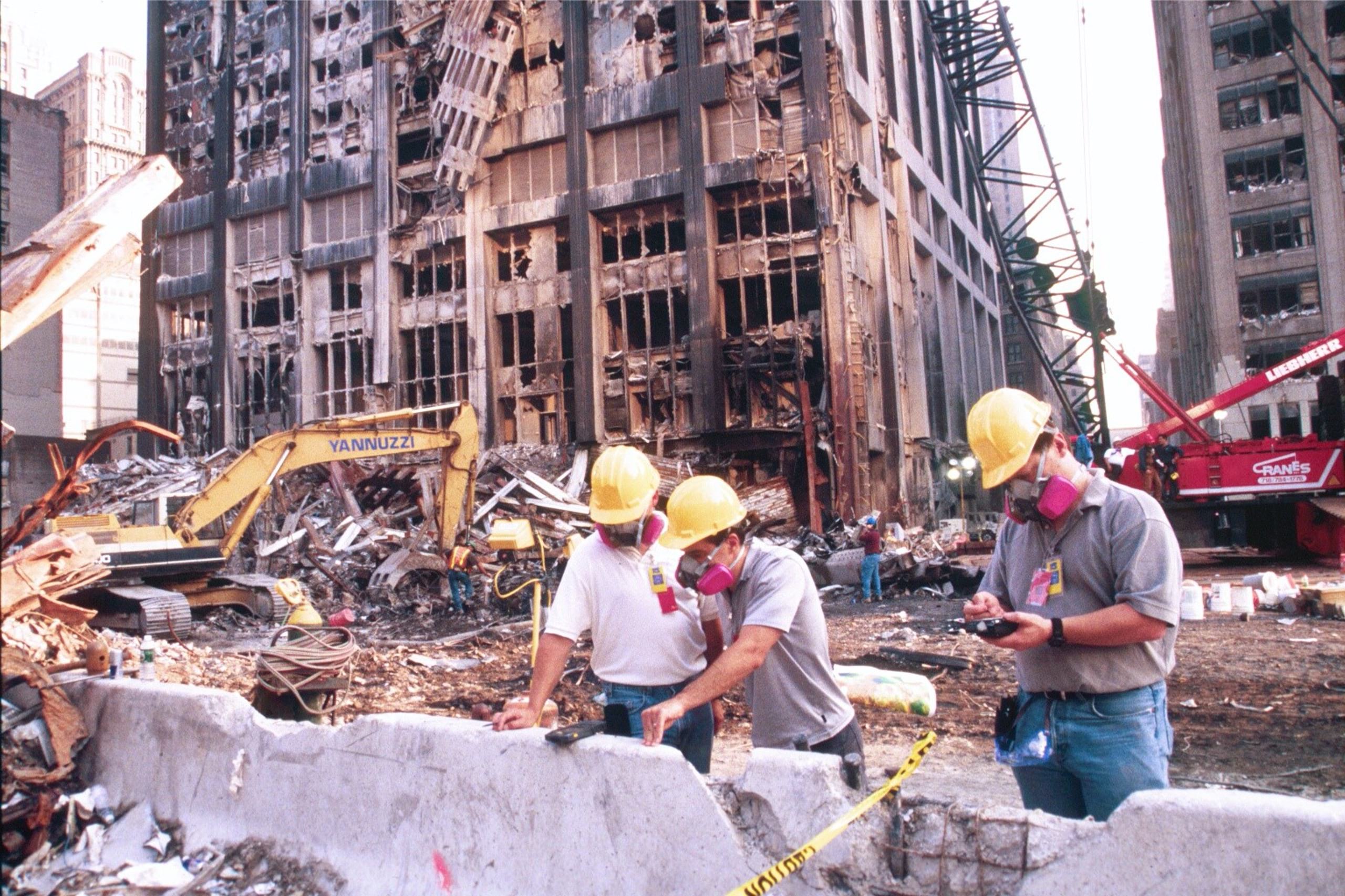
https://www.esri.com/about/newsroom/app/uploads/2021/09/Handheld_Mapping.jpg
but there are many more of these pictures!
You are exhibiting the same pathology as Maciej Wo?niak did when I went after him for not posting informative links. He posted two totally irrelevant links to prove that he could do it - missing the point that
they do need to be relevant to be informative.
On 1/04/2026 6:47 pm, Thomas Heger wrote:
Am Dienstag000031, 31.03.2026 um 14:10 schrieb Bill Sloman:
On 31/03/2026 6:39 pm, Thomas Heger wrote:
Am Montag000030, 30.03.2026 um 17:45 schrieb Bill Sloman:
<snip>
You could SEE these large chunks on several photos.
But you can't post a link to any of them.
Actually I did.
Really?
But google is nice and provided tons of links.
E.g. this is a good picture:
https://upload.wikimedia.org/wikipedia/commons/8/84/
September_17_2001_Ground_Zero_04.jpg
But what do you think it is telling you?
or this one
https://www.esri.com/about/newsroom/app/uploads/2021/09/
Handheld_Mapping.jpg
but there are many more of these pictures!
All of them meaningless in isolation.
But what do you think it is telling you?
or this one
https://www.esri.com/about/newsroom/app/uploads/2021/09/
Handheld_Mapping.jpg
but there are many more of these pictures!
All of them meaningless in isolation.
Am Mittwoch000001, 01.04.2026 um 17:34 schrieb Bill Sloman:
On 1/04/2026 6:47 pm, Thomas Heger wrote:
Am Dienstag000031, 31.03.2026 um 14:10 schrieb Bill Sloman:
On 31/03/2026 6:39 pm, Thomas Heger wrote:
Am Montag000030, 30.03.2026 um 17:45 schrieb Bill Sloman:
<snip>
You could SEE these large chunks on several photos.
But you can't post a link to any of them.
Actually I did.
Really?
But google is nice and provided tons of links.
E.g. this is a good picture:
https://upload.wikimedia.org/wikipedia/commons/8/84/
September_17_2001_Ground_Zero_04.jpg
But what do you think it is telling you?
You see hundreds of parts of the former perimeter-walls, each in the
ranger of more than 20 to, lying outside the WTC-plaza.
Actually I don't know, what that strange building was, but it didn't
belong to the WTC complex.
Because the sections of the perimeter walls are easy to identify by
their very special shape, we know, that these pieces flew from the twin-towers to where they were found on the next day.
This would allow us to reject the claim, that these pieces didn't fall
down, because you can clearly see numerous of these pieces on that picture.
It was strange, however, that these pieces flew that far and remained
there, while the much more logical place to fall upon (WTC-Plaza) wasn't
hit as much as that building, which apparently belonged to the harbor of
New York.
There are also sections of the twin towers, that pierced through the
walls of adjacent buildings.
This is cleanly visible on that photo, too.
or this one
https://www.esri.com/about/newsroom/app/uploads/2021/09/Handheld_Mapping.jpg
but there are many more of these pictures!
All of them meaningless in isolation.
No!!!!
You look at a picture, identify the visible items and try to figure out,
how the pieces managed to get there were they are seen.
The best way is to isolate the image and concentrate on very few items.
It doesn't make any sense at all, if you get overwhelmed with too many images.
Isolation of evidence is essential!
After that, you need to connect your findings again.
But too many pictures at once just blur your intuition.
Am Mittwoch000001, 01.04.2026 um 17:34 schrieb Bill Sloman:
what made these steel beams rust overnight?
On 3/04/2026 7:31 pm, Thomas Heger wrote:
Am Mittwoch000001, 01.04.2026 um 17:34 schrieb Bill Sloman:
<snipped lots of wishful thinking>
what made these steel beams rust overnight?
Encasing steel beams in concrete doesn't stop them rusting. It they'd
been bare, the fire would have stripped off any corrosion protection
they had, and got them hot enough to encourage rather rapid oxidation.
--
Bill Sloman, Sydney
Bill Sloman wrote:
On 3/04/2026 7:31 pm, Thomas Heger wrote:
Am Mittwoch000001, 01.04.2026 um 17:34 schrieb Bill Sloman:
<snipped lots of wishful thinking>
what made these steel beams rust overnight?
Encasing steel beams in concrete doesn't stop them rusting. It they'd
been bare, the fire would have stripped off any corrosion protection
they had, and got them hot enough to encourage rather rapid oxidation.
--
Bill Sloman, Sydney
Is Sydney your first name, middle name or last name?
On 4/04/2026 3:38 am, The Starmaker wrote:
Bill Sloman wrote:
On 3/04/2026 7:31 pm, Thomas Heger wrote:
Am Mittwoch000001, 01.04.2026 um 17:34 schrieb Bill Sloman:
<snipped lots of wishful thinking>
what made these steel beams rust overnight?
Encasing steel beams in concrete doesn't stop them rusting. It they'd
been bare, the fire would have stripped off any corrosion protection
they had, and got them hot enough to encourage rather rapid oxidation.
--
Bill Sloman, Sydney
Is Sydney your first name, middle name or last name?
It was Bill Sloman, Nijmegen but fifteen years ago I moved to Sydney, Australia. I am Australian, and so was my wife.
--
Bill Sloman, Sydney
Bill Sloman wrote:
On 4/04/2026 3:38 am, The Starmaker wrote:
Bill Sloman wrote:
On 3/04/2026 7:31 pm, Thomas Heger wrote:
Am Mittwoch000001, 01.04.2026 um 17:34 schrieb Bill Sloman:
<snipped lots of wishful thinking>
what made these steel beams rust overnight?
Encasing steel beams in concrete doesn't stop them rusting. It they'd
been bare, the fire would have stripped off any corrosion protection
they had, and got them hot enough to encourage rather rapid oxidation. >>>>
--
Bill Sloman, Sydney
Is Sydney your first name, middle name or last name?
It was Bill Sloman, Nijmegen but fifteen years ago I moved to Sydney,
Australia. I am Australian, and so was my wife.
You got a wife? Have you got any pictures of her??
On Tue, 24 Mar 2026 10:20:02 +0100, Gerhard Hoffmann <dk4xp@arcor.de>
wrote:
George Carlin put it better than I ever could:
< https://www.youtube.com/watch?v=C_FQZUSy1Vg >
about halfway into the clip.
What a nasty creep. I bet he would have signed up for Nazi Youth.
Am 24.03.26 um 13:46 schrieb john larkin:
On Tue, 24 Mar 2026 10:20:02 +0100, Gerhard Hoffmann <dk4xp@arcor.de>
wrote:
George Carlin put it better than I ever could:
< https://www.youtube.com/watch?v=C_FQZUSy1Vg >
about halfway into the clip.
What a nasty creep. I bet he would have signed up for Nazi Youth.
He was the antithesis to Nazi if there ever was one.
Nasty creeps are those who use war crimes to hide Sex Crimes.
Another way to put it is they kill children to hide they rape children.
On 3/04/2026 7:12 pm, Thomas Heger wrote:
Am Mittwoch000001, 01.04.2026 um 17:34 schrieb Bill Sloman:
On 1/04/2026 6:47 pm, Thomas Heger wrote:
Am Dienstag000031, 31.03.2026 um 14:10 schrieb Bill Sloman:
On 31/03/2026 6:39 pm, Thomas Heger wrote:
Am Montag000030, 30.03.2026 um 17:45 schrieb Bill Sloman:
<snip>
You could SEE these large chunks on several photos.
But you can't post a link to any of them.
Actually I did.
Really?
But google is nice and provided tons of links.
E.g. this is a good picture:
https://upload.wikimedia.org/wikipedia/commons/8/84/
September_17_2001_Ground_Zero_04.jpg
But what do you think it is telling you?
You see hundreds of parts of the former perimeter-walls, each in the
ranger of more than 20 to, lying outside the WTC-plaza.
You see lumps of concrete - you don't know where they came from or how
much they weigh.
Actually I don't know, what that strange building was, but it didn't
belong to the WTC complex.
Because the sections of the perimeter walls are easy to identify by
their very special shape, we know, that these pieces flew from the
twin-towers to where they were found on the next day.
And what shape was that?
This would allow us to reject the claim, that these pieces didn't fall
down, because you can clearly see numerous of these pieces on that
picture.
But you don't know what they are or where they came from. You want them
to be sections of the perimeter wall, but simple assertion doesn't hack it.
It was strange, however, that these pieces flew that far and remained
there, while the much more logical place to fall upon (WTC-Plaza)
wasn't hit as much as that building, which apparently belonged to the
harbor of New York.
There are also sections of the twin towers, that pierced through the
walls of adjacent buildings.
They were the vertical structural columns, which tilted over as they
fell down, after the steel links in the floors of each storey failed and dump each floor onto the floor below
On 3/04/2026 7:31 pm, Thomas Heger wrote:
Am Mittwoch000001, 01.04.2026 um 17:34 schrieb Bill Sloman:
<snipped lots of wishful thinking>
what made these steel beams rust overnight?
Encasing steel beams in concrete doesn't stop them rusting. It they'd
been bare, the fire would have stripped off any corrosion protection
they had, and got them hot enough to encourage rather rapid oxidation.
Am Freitag000003, 03.04.2026 um 18:16 schrieb Bill Sloman:
On 3/04/2026 7:31 pm, Thomas Heger wrote:
Am Mittwoch000001, 01.04.2026 um 17:34 schrieb Bill Sloman:
<snipped lots of wishful thinking>
what made these steel beams rust overnight?
Encasing steel beams in concrete doesn't stop them rusting. It they'd
been bare, the fire would have stripped off any corrosion protection
they had, and got them hot enough to encourage rather rapid oxidation.
'Rapid rust' was among the strangest things happening at 9/11!
MANY massive steel items collected rusted almost instantly. That were
not only steel beems of adjacent buildings, but lots of other items collected rust very fast.
That was a VERY (!!) unusual phenomenon.
Usually it can take weeks for bare steel to rust, even in 'hostile' environments.
Am Freitag000003, 03.04.2026 um 14:42 schrieb Bill Sloman:
On 3/04/2026 7:12 pm, Thomas Heger wrote:
Am Mittwoch000001, 01.04.2026 um 17:34 schrieb Bill Sloman:
On 1/04/2026 6:47 pm, Thomas Heger wrote:
Am Dienstag000031, 31.03.2026 um 14:10 schrieb Bill Sloman:
On 31/03/2026 6:39 pm, Thomas Heger wrote:
Am Montag000030, 30.03.2026 um 17:45 schrieb Bill Sloman:
<snip>
You could SEE these large chunks on several photos.
But you can't post a link to any of them.
Actually I did.
Really?
But google is nice and provided tons of links.
E.g. this is a good picture:
https://upload.wikimedia.org/wikipedia/commons/8/84/
September_17_2001_Ground_Zero_04.jpg
But what do you think it is telling you?
You see hundreds of parts of the former perimeter-walls, each in the
ranger of more than 20 to, lying outside the WTC-plaza.
You see lumps of concrete - you don't know where they came from or how
much they weigh.
Actually I don't know, what that strange building was, but it didn't
belong to the WTC complex.
Because the sections of the perimeter walls are easy to identify by
their very special shape, we know, that these pieces flew from the
twin-towers to where they were found on the next day.
And what shape was that?
The sections of the perimeter walls were pre-fabricated and lifted to
their position with cranes. There the large pieces were bolted together
and later welded.
The sections looked more or less similar and consisted of a number of vertical and horizontal steel beams.
If you see such pieces in the rubble, you know with certainty that they
came from one of the twin towers.
From where they came exactly is hard to say, because these sections
were build mainly equally.˙ If there were any differences at all would
be a good question. But at least I don't know about any differences.
Therefore you only know, that they stem from the outer perimeter walls
of one of the towers.
The mass was roughly twenty tons each (sorry, but I actually don't know
the exact weight).
This would allow us to reject the claim, that these pieces didn't
fall down, because you can clearly see numerous of these pieces on
that picture.
But you don't know what they are or where they came from. You want
them to be sections of the perimeter wall, but simple assertion
doesn't hack it.
I know what the were, but not were they have been before, because these sections were mainly equal.
Don't know if there were significant differencers, which would allow to identify the individual piece.
It was strange, however, that these pieces flew that far and remained
there, while the much more logical place to fall upon (WTC-Plaza)
wasn't hit as much as that building, which apparently belonged to the
harbor of New York.
There are also sections of the twin towers, that pierced through the
walls of adjacent buildings.
They were the vertical structural columns, which tilted over as they
fell down, after the steel links in the floors of each storey failed
and dumped each floor onto the floor below
Sure, something like that...
BUT: why didn't twenty ton massive pieces of steel with a velocity of up
to 350 km/h˙ damage the ground level of the WTC-plaza????
That was a VERY unusual habit!!!
Instead of piercing through the floor, these sections pierced through
the facades of adjacent buildings and remained intact outside of the WTC-Plaza, while turning into fine dust inside that WTC-area.
THAT was INSANELY surreal!!!
On 5/04/2026 6:14 pm, Thomas Heger wrote:
Am Freitag000003, 03.04.2026 um 18:16 schrieb Bill Sloman:
On 3/04/2026 7:31 pm, Thomas Heger wrote:
Am Mittwoch000001, 01.04.2026 um 17:34 schrieb Bill Sloman:
<snipped lots of wishful thinking>
what made these steel beams rust overnight?
Encasing steel beams in concrete doesn't stop them rusting. It they'd
been bare, the fire would have stripped off any corrosion protection
they had, and got them hot enough to encourage rather rapid oxidation.
'Rapid rust' was among the strangest things happening at 9/11!
MANY massive steel items collected rusted almost instantly. That were
not only steel beems of adjacent buildings, but lots of other items
collected rust very fast.
That was a VERY (!!) unusual phenomenon.
Usually it can take weeks for bare steel to rust, even in 'hostile'
environments.
If you want to speed up a chemical reaction, get the reagents hot.
The Twin Towers fell down because the fire started by crashing the jet planes into the buildings got hot enough to weaken the steel frames.
It also got them hot enough to rust remarkably rapidly.
You see hundreds of parts of the former perimeter-walls, each in the
ranger of more than 20 to, lying outside the WTC-plaza.
You see lumps of concrete - you don't know where they came from or
how much they weigh.
Actually I don't know, what that strange building was, but it didn't
belong to the WTC complex.
Because the sections of the perimeter walls are easy to identify by
their very special shape, we know, that these pieces flew from the
twin-towers to where they were found on the next day.
And what shape was that?
The sections of the perimeter walls were pre-fabricated and lifted to
their position with cranes. There the large pieces were bolted
together and later welded.
The sections looked more or less similar and consisted of a number of
vertical and horizontal steel beams.
If you see such pieces in the rubble, you know with certainty that
they came from one of the twin towers.
˙From where they came exactly is hard to say, because these sections
were build mainly equally.˙ If there were any differences at all would
be a good question. But at least I don't know about any differences.
Therefore you only know, that they stem from the outer perimeter walls
of one of the towers.
The mass was roughly twenty tons each (sorry, but I actually don't
know the exact weight).
This would allow us to reject the claim, that these pieces didn't
fall down, because you can clearly see numerous of these pieces on
that picture.
But you don't know what they are or where they came from. You want
them to be sections of the perimeter wall, but simple assertion
doesn't hack it.
I know what the were, but not were they have been before, because
these sections were mainly equal.
Don't know if there were significant differencers, which would allow
to identify the individual piece.
It was strange, however, that these pieces flew that far and
remained there, while the much more logical place to fall upon (WTC-
Plaza) wasn't hit as much as that building, which apparently
belonged to the harbor of New York.
There are also sections of the twin towers, that pierced through the
walls of adjacent buildings.
They were the vertical structural columns, which tilted over as they
fell down, after the steel links in the floors of each storey failed
and dumped each floor onto the floor below
Sure, something like that...
BUT: why didn't twenty ton massive pieces of steel with a velocity of
up to 350 km/h˙ damage the ground level of the WTC-plaza????
Probably because there weren't any twenty ton massive pieces of steel falling freely from the top of world Trade Centre.
That was a VERY unusual habit!!!
Nobody makes a habit of dropping twenty ton pieces of steel from the
tops of very tall buildings. It is anti-social and discouraged.
Instead of piercing through the floor, these sections pierced through
the facades of adjacent buildings and remained intact outside of the
WTC-Plaza, while turning into fine dust inside that WTC-area.
The columns didn't drop vertically - they swayed out of the vertical and eventually swayed far enough to fall over, but the sway meant that they didn't fall freely or vertically.
THAT was INSANELY surreal!!!
The insanity is all in your insistence on imaging what might have been
going on, rather than trying to find out.
Am Sonntag000005, 05.04.2026 um 18:53 schrieb Bill Sloman:
...
You see hundreds of parts of the former perimeter-walls, each in
the ranger of more than 20 to, lying outside the WTC-plaza.
You see lumps of concrete - you don't know where they came from or
how much they weigh.
Actually I don't know, what that strange building was, but it
didn't belong to the WTC complex.
Because the sections of the perimeter walls are easy to identify by >>>>> their very special shape, we know, that these pieces flew from the
twin-towers to where they were found on the next day.
And what shape was that?
The sections of the perimeter walls were pre-fabricated and lifted to
their position with cranes. There the large pieces were bolted
together and later welded.
The sections looked more or less similar and consisted of a number of
vertical and horizontal steel beams.
If you see such pieces in the rubble, you know with certainty that
they came from one of the twin towers.
˙From where they came exactly is hard to say, because these sections
were build mainly equally.˙ If there were any differences at all
would be a good question. But at least I don't know about any
differences.
Therefore you only know, that they stem from the outer perimeter
walls of one of the towers.
The mass was roughly twenty tons each (sorry, but I actually don't
know the exact weight).
This would allow us to reject the claim, that these pieces didn't
fall down, because you can clearly see numerous of these pieces on
that picture.
But you don't know what they are or where they came from. You want
them to be sections of the perimeter wall, but simple assertion
doesn't hack it.
I know what the were, but not were they have been before, because
these sections were mainly equal.
Don't know if there were significant differencers, which would allow
to identify the individual piece.
It was strange, however, that these pieces flew that far and
remained there, while the much more logical place to fall upon
(WTC- Plaza) wasn't hit as much as that building, which apparently
belonged to the harbor of New York.
There are also sections of the twin towers, that pierced through
the walls of adjacent buildings.
They were the vertical structural columns, which tilted over as they
fell down, after the steel links in the floors of each storey failed
and dumped each floor onto the floor below
Sure, something like that...
BUT: why didn't twenty ton massive pieces of steel with a velocity of
up to 350 km/h˙ damage the ground level of the WTC-plaza????
Probably because there weren't any twenty ton massive pieces of steel
falling freely from the top of world Trade Centre.
You would certainly agree, that the twintowers actually collapsed.
So: 'what was up had to come down' (in one way or the other), because steel-beams are not supposed to stay floating in the sky.
We could discuss the size of the pieces, but not the total mass and the hight, from where these pieces had to come down.
Each tower was made from roughly 600,000 to of material.
So, it we had, say, ten-thousand pieces, each piece would have a mass of
60 tonns.
That's a little large, so lets assume 30,000 pieces of debris (per tower).
That would give us an average of 20 to per piece.
But by looking at the pile of the rubble, there haven't been 30,000
pieces of an average of 20 to in each of the piles.
I would say, there were less the ten-thousand pieces of such a mass, possibly far less (in both piles combined!).
But, if you prefer that, we could also assume 40,000 pieces with an
average mass of 15 to or 60,000 pieces weighing on average 10 tonns each.
What would you prefer?
That was a VERY unusual habit!!!
Nobody makes a habit of dropping twenty ton pieces of steel from the
tops of very tall buildings. It is anti-social and discouraged.
You are absolute right and nobody would drop such piece intentionally
from such a height.
But we're not talking about intentions, but about the collase of a skyscraper. This did happen and therefore we need to assume, that the
pieces fell down some way.
Instead of piercing through the floor, these sections pierced through
the facades of adjacent buildings and remained intact outside of the
WTC-Plaza, while turning into fine dust inside that WTC-area.
The columns didn't drop vertically - they swayed out of the vertical
and eventually swayed far enough to fall over, but the sway meant that
they didn't fall freely or vertically.
Sure, but the pieces 'falling' sideways had enough kinetic energy to
pierce through the steel structures of adjacent buildings.
So: why didn't they cut through the floor level of the WTC-Plaza???
There the kinetic energy would be even higher.
THAT was INSANELY surreal!!!
The insanity is all in your insistence on imaging what might have been
going on, rather than trying to find out.
Well, I was never in New York and all I have are such pictures.
Therefore, I can only used pictures of independent sources.
This is certainly not evidence in a classical sense. But you could
easily obtain similar pictures from other source and could choose, whom
you trust more.
Am Sonntag000005, 05.04.2026 um 12:58 schrieb Bill Sloman:
On 5/04/2026 6:14 pm, Thomas Heger wrote:
Am Freitag000003, 03.04.2026 um 18:16 schrieb Bill Sloman:
On 3/04/2026 7:31 pm, Thomas Heger wrote:
Am Mittwoch000001, 01.04.2026 um 17:34 schrieb Bill Sloman:
<snipped lots of wishful thinking>
what made these steel beams rust overnight?
Encasing steel beams in concrete doesn't stop them rusting. It
they'd been bare, the fire would have stripped off any corrosion
protection they had, and got them hot enough to encourage rather
rapid oxidation.
'Rapid rust' was among the strangest things happening at 9/11!
MANY massive steel items collected rusted almost instantly. That were
not only steel beems of adjacent buildings, but lots of other items
collected rust very fast.
That was a VERY (!!) unusual phenomenon.
Usually it can take weeks for bare steel to rust, even in 'hostile'
environments.
If you want to speed up a chemical reaction, get the reagents hot.
The Twin Towers fell down because the fire started by crashing the jet
planes into the buildings got hot enough to weaken the steel frames.
It also got them hot enough to rust remarkably rapidly.
Well, possibly...
But adjacent buildings were not hit by planes and didn't burn.
E.g. have a look at this picture:
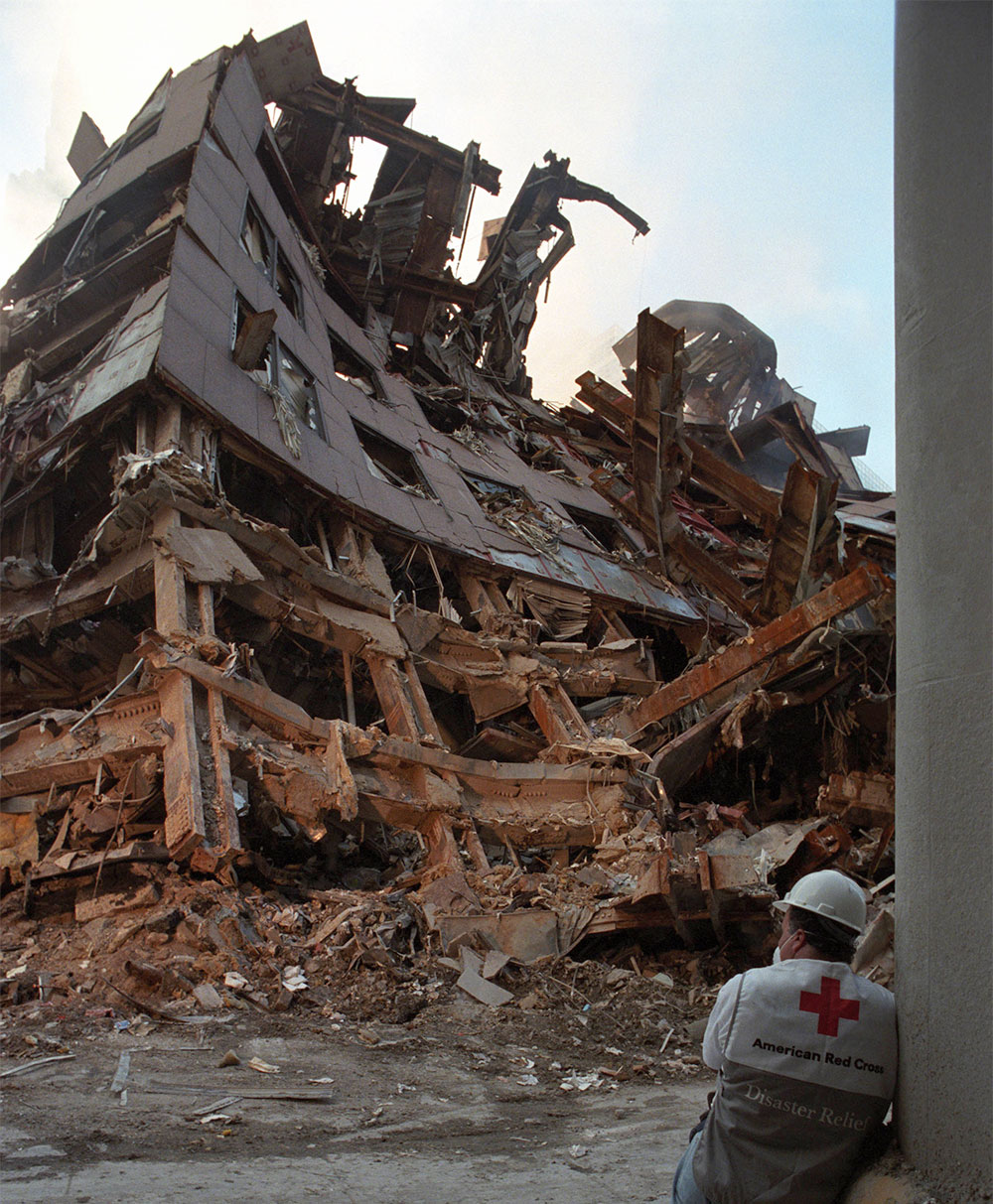
https://www.redcross.org/content/dam/redcross/local/news-articles/greater-new-york/1-36484-003-1000x1213.jpg
Here you can˙ see a building, which wasn't hit by a plane, but is quite rusty.
This means, that rust appeared almost instantly.
There were also these 'half-burned cars', where the burned side was also very rusty, while the other half of the same car was still undamaged.
That was all VERY strange!
My current guess:
there was an invisible field in action (possibly 'scalar waves'), which
was tuned to resonate with steel and concrete.
This was centered around the twin-towers and was able to turn
Steel-beams into fine dust and less resonant steel at least into rust.
That was something like a HUGE 'microwave oven', which turned the large buildings into molten metal and dust and cars and other stuff into rust.
What was entirely unharmed was apparently paper, which managed to fly
away from the towers, while the metal cabinets these papers were stored turned into dust.
On 6/04/2026 9:09 pm, Thomas Heger wrote:
Am Sonntag000005, 05.04.2026 um 18:53 schrieb Bill Sloman:
...
You see hundreds of parts of the former perimeter-walls, each in
the ranger of more than 20 to, lying outside the WTC-plaza.
You see lumps of concrete - you don't know where they came from or
how much they weigh.
Actually I don't know, what that strange building was, but it
didn't belong to the WTC complex.
Because the sections of the perimeter walls are easy to identify
by their very special shape, we know, that these pieces flew from >>>>>> the twin-towers to where they were found on the next day.
And what shape was that?
The sections of the perimeter walls were pre-fabricated and lifted
to their position with cranes. There the large pieces were bolted
together and later welded.
The sections looked more or less similar and consisted of a number
of vertical and horizontal steel beams.
If you see such pieces in the rubble, you know with certainty that
they came from one of the twin towers.
˙From where they came exactly is hard to say, because these sections
were build mainly equally.˙ If there were any differences at all
would be a good question. But at least I don't know about any
differences.
Therefore you only know, that they stem from the outer perimeter
walls of one of the towers.
The mass was roughly twenty tons each (sorry, but I actually don't
know the exact weight).
This would allow us to reject the claim, that these pieces didn't >>>>>> fall down, because you can clearly see numerous of these pieces on >>>>>> that picture.
But you don't know what they are or where they came from. You want
them to be sections of the perimeter wall, but simple assertion
doesn't hack it.
I know what the were, but not were they have been before, because
these sections were mainly equal.
Don't know if there were significant differencers, which would allow
to identify the individual piece.
It was strange, however, that these pieces flew that far and
remained there, while the much more logical place to fall upon
(WTC- Plaza) wasn't hit as much as that building, which apparently >>>>>> belonged to the harbor of New York.
There are also sections of the twin towers, that pierced through
the walls of adjacent buildings.
They were the vertical structural columns, which tilted over as
they fell down, after the steel links in the floors of each storey
failed and dumped each floor onto the floor below
Sure, something like that...
BUT: why didn't twenty ton massive pieces of steel with a velocity
of up to 350 km/h˙ damage the ground level of the WTC-plaza????
Probably because there weren't any twenty ton massive pieces of steel
falling freely from the top of world Trade Centre.
You would certainly agree, that the twintowers actually collapsed.
So: 'what was up had to come down' (in one way or the other), because
steel-beams are not supposed to stay floating in the sky.
We could discuss the size of the pieces, but not the total mass and
the hight, from where these pieces had to come down.
Each tower was made from roughly 600,000 to of material.
So, it we had, say, ten-thousand pieces, each piece would have a mass
of 60 tonns.
That's a little large, so lets assume 30,000 pieces of debris (per
tower).
That would give us an average of 20 to per piece.
But by looking at the pile of the rubble, there haven't been 30,000
pieces of an average of 20 to in each of the piles.
I would say, there were less the ten-thousand pieces of such a mass,
possibly far less (in both piles combined!).
But, if you prefer that, we could also assume 40,000 pieces with an
average mass of 15 to or 60,000 pieces weighing on average 10 tonns each.
What would you prefer?
That was a VERY unusual habit!!!
Nobody makes a habit of dropping twenty ton pieces of steel from the
tops of very tall buildings. It is anti-social and discouraged.
You are absolute right and nobody would drop such piece intentionally
from such a height.
But we're not talking about intentions, but about the collase of a
skyscraper. This did happen and therefore we need to assume, that the
pieces fell down some way.
Instead of piercing through the floor, these sections pierced
through the facades of adjacent buildings and remained intact
outside of the WTC-Plaza, while turning into fine dust inside that
WTC-area.
The columns didn't drop vertically - they swayed out of the vertical
and eventually swayed far enough to fall over, but the sway meant
that they didn't fall freely or vertically.
Sure, but the pieces 'falling' sideways had enough kinetic energy to
pierce through the steel structures of adjacent buildings.
The top of the column moved further sideways that the bits closer to the ground. I'd imagine that the columns lost the their lateral support from
the top down - as each floor fell down onto the one below it, the tops vertical columns would splay out a bit further until the residual
stiffness wasn't enough to constrain the lateral motion and they'd go
from being bent to being u-shaped with what had the top now hitting the ground.
So: why didn't they cut through the floor level of the WTC-Plaza???
Because they went sideways before they went down.
Am Montag000006, 06.04.2026 um 20:11 schrieb Bill Sloman:
On 6/04/2026 9:09 pm, Thomas Heger wrote:
Am Sonntag000005, 05.04.2026 um 18:53 schrieb Bill Sloman:
Because they went sideways before they went down.
Look at this picture and ask yourself: what is depicted on this photo?
https://cdn.abcotvs.com/dip/images/291527_AP01091002603.jpg
You see a fireman and a police car, which is standing on the street near
the ruins of one of the WTC-buildings.
The police car is hardly damaged and there was almost no debris and you
can clearly see the street level.
This means:
the remains of that destroyed building didn't fall outside of the
buildings own footprint.
This fact alone is extremely strange, because this would mean, that the building had mainly vanished without a trace.
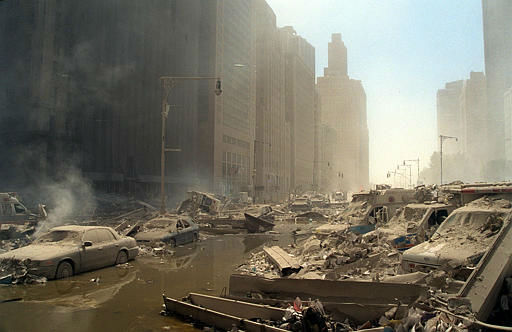
This is another picture with strange content: https://cdn.abcotvs.com/dip/images/291530_AP01091105609.jpg
It shows rows of parking cars, with remains of the perimeter walls of
the twintowers inbetween the cars.
But the cars had still windows, which were covered with dust, but were
not broken.
Now: such a huge steel beam could break the windscreen of any car with
ease, even if it didn't drop from more than a meter.
So, why didn't the windows break?
Or his page:
https://www.bbc.com/news/world-europe-58512318
There you can see a picture, which shows car inside the rubble of one of
the towers.
These cars looked quite undamaged, if you take into account, that just recently the remains of the largest building in the world fell upon them.
Or that issue: lots and lots of unburned paper in the streets, while none of the filing
cabinets remained:
https://www.bu.edu/files/2021/09/resize-3905155592_0d38904c5e_o.jpg
How did that happen?
I mean, if you melt the cabinets, the paper should be burnt (at least a little).
| Sysop: | Jacob Catayoc |
|---|---|
| Location: | Pasay City, Metro Manila, Philippines |
| Users: | 6 |
| Nodes: | 4 (0 / 4) |
| Uptime: | 493396:30:12 |
| Calls: | 141 |
| Files: | 538 |
| Messages: | 76,275 |